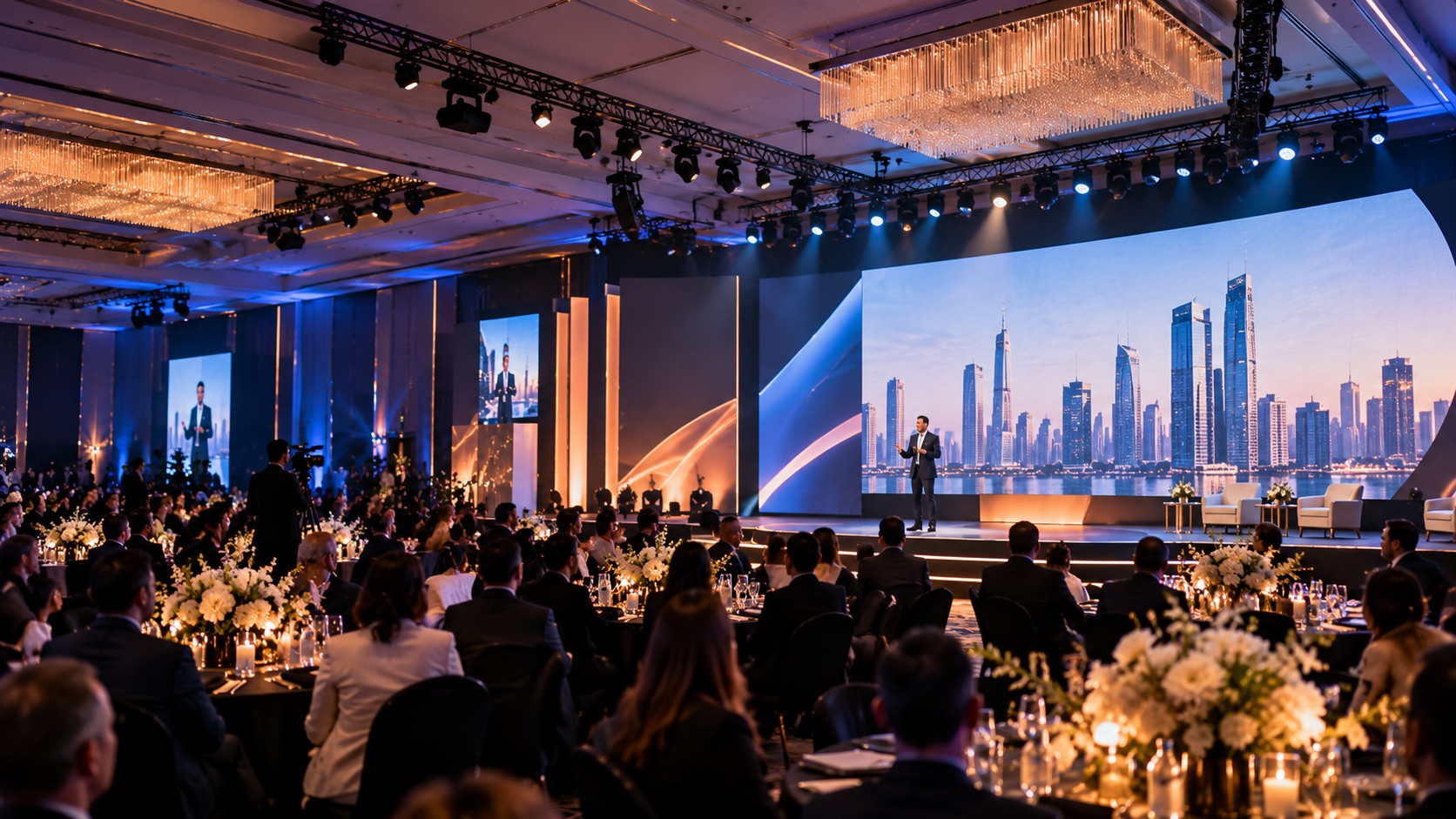
Luxury event AV and lighting packages are the fastest way to turn a venue into a controlled, premium experience. The right package combines sound, lighting, screens, and show control around the event’s goal, not just the room size.
That matters because polished events do not feel accidental. Guests notice when speeches are crisp, reveal moments land on cue, and the room shifts smoothly from arrival to stage focus, then into dining or networking without a visible reset.
Room size still matters, but it is rarely the main decision. A compact executive launch may need tighter cueing and cleaner screen integration than a much larger social event.
A premium package also reduces hidden risk. Instead of hiring separate suppliers who each optimise their own corner, you get a joined-up plan for creative design, technical delivery, rehearsal, and live operation. That is what keeps the stage picture consistent, the content legible, the presenters confident, and the atmosphere calm. The guide below shows what to compare, what to prioritise, and when an integrated production approach is worth it.
What a luxury AV and lighting package should include
A luxury package is a planned production system for a premium event. It bundles the technical tools and the people who design, programme, rehearse, and operate them, so sound, lighting, screens, staging, and cueing work as one guest experience rather than as separate rentals.
Buyers should expect clear coverage for audio, show lighting, display surfaces, control, power, rigging where needed, and onsite operation. They should also expect a pre-production process that explains how content will appear, how cues will be called, and how the room will shift through each phase of the event.
As a practical benchmark, Perfect Party Events lists 3D scenic renderings, LED screen programming, sound engineering, show calling cues, and lighting design rehearsals. That matters because premium production is built before the event, not improvised during it.
When proposals look similar, compare the scope behind the equipment list. A stronger brief will cover content formatting, presenter support, backup planning, and scenic coordination, much like a corporate event planning checklist. That is how you judge substance instead of brand names.
How to match the package to your event format
Different formats ask for different technical behaviour. The same equipment can feel premium or clumsy depending on how well it matches the programme.
For launches, galas, conferences, and private celebrations
Define the job of the room. A launch needs reveal control and brand accuracy. A gala needs stage drama without losing dining comfort, while a conference needs speech clarity and readable content all day. Done looks like a brief that states the main guest focus in each segment, from arrival to closing.
Map the cue density. Launches and awards usually need tight timing, instant screen changes, music hits, and lighting transitions. Private celebrations may need fewer formal cues but more flexible atmosphere shifts. Done looks like a run sheet that shows who calls each cue, what triggers it, and what happens if a speaker runs early or late.
Match the visual language to the format. Conferences reward restraint, strong key light, and clean graphics. Galas and private events can carry deeper colour, texture, and more scenic layering, while branded activations often borrow lessons from a guide to exhibition stand design companies. Done looks like a room that feels intentional in photos and effortless in person, with no element fighting for attention.
Choose lighting and sound that support the guest experience
| Guest priority | Optimise first | Lighting approach | Sound and control notes |
|---|---|---|---|
| Speeches | Voice clarity and sightlines to the speaker | Clean front light, flattering skin tone, no distracting colour changes | Use reliable microphones, speech-focused tuning, and simple cueing |
| Performances | Coverage, impact, and performer confidence | Layered looks with movement and contrast that suit the act | Tune for music energy, stage monitoring, and precise playback timing |
| Reveal moments | Timing, concealment, and camera-ready impact | Build contrast, hold focus, then switch decisively on cue | Lock playback, lighting, and screen cues to one show call |
| Networking | Comfort and conversation | Warm, even ambience with enough definition for the room to feel dressed | Keep levels controlled and distributed so speech stays easy |
| Atmosphere | Overall mood and brand tone | Use colour, texture, and dimming to shape the room without overpowering it | Support the mood with subtle playlists and unobtrusive operation |
The table shows what to optimise first for each event priority; if the room also depends on scenic dining zones or event rentals and live food stations, align those elements to the same cue plan.
How to judge production quality before you book
Creative
- Request venue-aware renders, not mood boards alone.
- Check how screen content, scenic finishes, and the lighting palette are coordinated.
- Ask who owns content formatting and last-minute deck updates.
- Confirm the proposal explains sightlines for VIP seating, entrances, and cameras.
- Check the team can take a launch from render to cue sheet without handoffs.
- Ask for a sample workflow from a product launch event management team.
Rehearsal
- Confirm there is a lighting focus and cue rehearsal, not just a sound check.
- Ask whether presenters rehearse with confidence monitors, microphones, and clickers.
- Check who calls the show and how cues are logged for live execution.
- Make sure the team can rehearse reveal timing with real content, not placeholders.
On-site control
- Confirm one production lead can make fast decisions across AV, lighting, and staging.
- Ask what backup plan covers microphone failure, content mismatch, or delayed arrivals.
- Check load-in, reset, and strike plans so guest areas stay calm and tidy.
- Make sure backstage communication stays separate from guest-facing sound.
- Confirm power, cable routes, and operator positions are planned before show day.
When to choose a bespoke production partner instead of piecing it together
Choose a bespoke production partner when the event has multiple moving parts, a brand reveal, VIP sensitivity, or no room for visible recovery. Piece it together only for simpler formats with limited cues and a straightforward room, because coordination risk rises fast once creative, staging, and live operation are split.
The deciding reasons are usually ownership, timing, and accountability. One integrated lead can align scenic design with screen content, keep lighting flattering for both guests and cameras, and manage revisions without suppliers passing problems to each other. That matters even more for corporate gala event management services, where guest hospitality and stage precision have to share the same schedule.
Perfect Party Events lists that it has managed 500+ luxury events. That kind of repetition is useful when the room has to look refined, sound clean, and stay calm while the programme changes in real time. Experience alone is not enough, but it should come with clear show calling, rehearsal discipline, and a single chain of command.
If you want a single team to plan, style, and run the production, enquire with Perfect Party Events for a tailored package.
Frequently asked questions
What should be included in luxury event AV and lighting packages?
A strong package should include sound, lighting, screens, show control, content support, onsite operation, and a clear rehearsal plan. The useful detail is not the gear list alone, but who is responsible for programming cues, formatting content, and making live decisions when the event shifts.
How far in advance should a buyer book a production team?
Book the production team as early as the event concept is stable enough to define the format, venue, and guest experience. Premium events need time for design development, technical planning, venue coordination, content prep, and at least one proper rehearsal before doors open.
How do luxury event AV and lighting packages support speeches and reveals?
They support speeches and reveals by making timing, visibility, and audibility predictable instead of left to chance. For speeches, that means clean microphones, readable screens, and flattering front light; for reveals, it means coordinated cueing across lighting, content, music, and stage action.
Can one team handle both the creative design and the technical execution?
Yes, one team can handle both creative design and technical execution, and that is often the safer model for polished events. It works best when the same production lead oversees scenic intent, content display, rehearsal notes, and live show calling, so there is no gap between the idea and the delivery.